Young ERCOFTAC Montestigliano Spring School for Graduate Students 2026
Topic:
Modeling Transitional and Turbulent Flows Using Input–Output
and
Resolvent Analyses
Guest speaker:
Prof. Tim Colonius
Caltech
Date and Location:
18th - 25th April 2026
Montestigliano, Italy
SCOPE:
Modern flow-stability analysis is often cast as an optimization problem: what generic forcing of a base flow leads to the most strongly amplified disturbances? This viewpoint provides clear upper bounds on disturbance growth but does not indicate how sharp those bounds are and can therefore lead to overly conservative designs. With modest additional physical reasoning, however, the forcing can be restricted to more realistic subspaces—for example, by enforcing realizability constraints. The same mathematical framework also underpins resolvent analysis, which models coherent structures in fully turbulent flows. In both transitional and turbulent regimes, data can complement the analysis to produce effective reduced-order models. This short course will review the essential input–output and resolvent framework, discuss numerical methods for solving the underlying optimization problems, and show how to extend these ideas to constrained formulations and data-assisted modeling. Examples from the literature will be paired with hands-on, team-based projects on selected canonical flows
As previous years, the workshop is meant to be a learning opportunity for doctoral and postdoctoral students, where they get to work interactively in groups on open research problems and in close contact with the organizers and the invited speaker.
REGISTRATION FEE: €200
Selected candidates will subsequently be notified and will receive a fellowship that covers accommodation. Travel costs to and from the workshop venue have to be carried by the home institute.
HOW TO APPLY:
Applications of prospective participants should contain:
- A Curriculum Vitae (CV) or resume of the applicant (max one page)
- A short letter of purpose from the student (max one page), highlighting in particular the relevance of the workshop to his/her research topic.
- A short letter of recommendation from the supervisor of the applicant (max one page).
The applications should be submitted through the link below:
APPLICATION DEADLINE: February 8th, 2026
ORGANISERS:
- Shervin Bagheri (KTH): shervinb@kth.se
- Taraneh Sayadi (CNAM): taraneh.sayadi@lecnam.net
- Peter Schmid (KAUST): peter.schmid@kaust.edu.sa
We would be grateful if you could disseminate this information to colleagues that could be interested in this event.
ABOUT ERCOFTAC MONTESTIGLIANO SPRING SCHOOL:
ERCOFTAC Montestigliano Spring School is an event for young scientists covering a specific multi-disciplinary and modern topic in fluid mechanics. Its format is based on an interactive teaching concept. Besides the traditional supervision by the student's advisor, the typical education of a PhD student seldom involves hands-on training under the guidance of a true expert in a particular and complementary field. University courses succeed in laying a foundation in rudimentary (and even a few specialized) concepts. Conferences, mini-symposia and standard workshops expose young scientists to recent advances. In Montestigliano, students collaborate intensively during a full week in small groups under the guidance of a world-leading expert in a specialized topic.
VENUE:
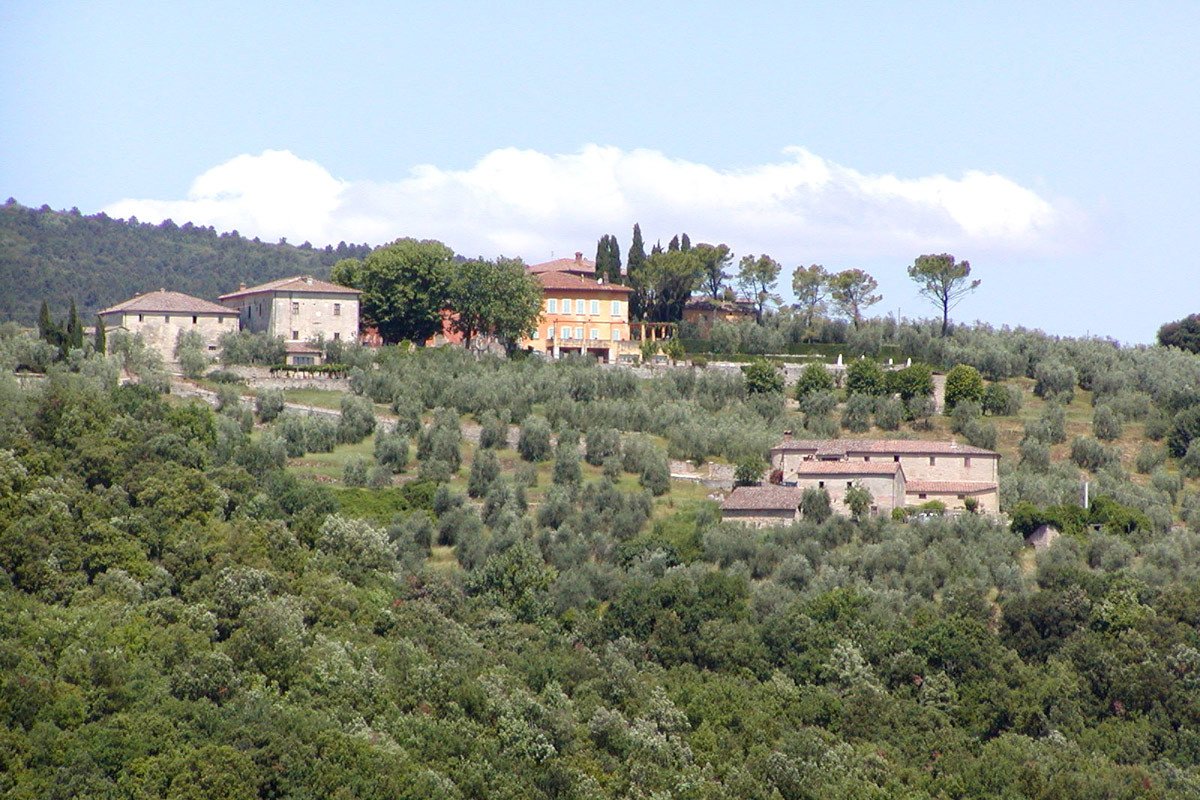
The workshop will take place at the picturesque estate of Montestigliano in the heart of Tuscany. The village of Montestigliano is composed of 18th century buildings, typically of Tuscan architecture. Located 15 km south-west of Siena, it provides a stunning landscape and a stimulating environment for both intensive work and relaxation. The 18th century houses and farm buildings have been carefully restored to retain their original features common to Tuscan architecture. For further information visit: http://www.montestigliano.it/.
 Pilot
Pilot Special Interest
 Knowledge
 ERCOFTAC